


The Normandy for Peace initiative is the result of the Region's desire to continue the work of remembrance accomplished since the Second World War. It has been informed by the values of peace and freedom reflected in the Normandy landings. The modern world was shaped on the Normandy beaches in 1944.
The D-Day Beaches, a UNESCO World Heritage Site
Listed as a UNESCO World Heritage Site since July 2026, the D-Day Beaches are recognized for their Outstanding Universal Value. As the site of the Allied landings on June 6, 1944, they preserve the physical and commemorative traces of an event that contributed to the liberation of Europe and the end of World War II. Stretching from Ravenoville to Ouistreham along nearly 80 kilometers of coastline, this unique cultural landscape has become a global gathering place centered on a universal message of freedom, peace, and reconciliation. This designation affirms Normandy’s commitment to preserving and passing on this heritage to future generations.

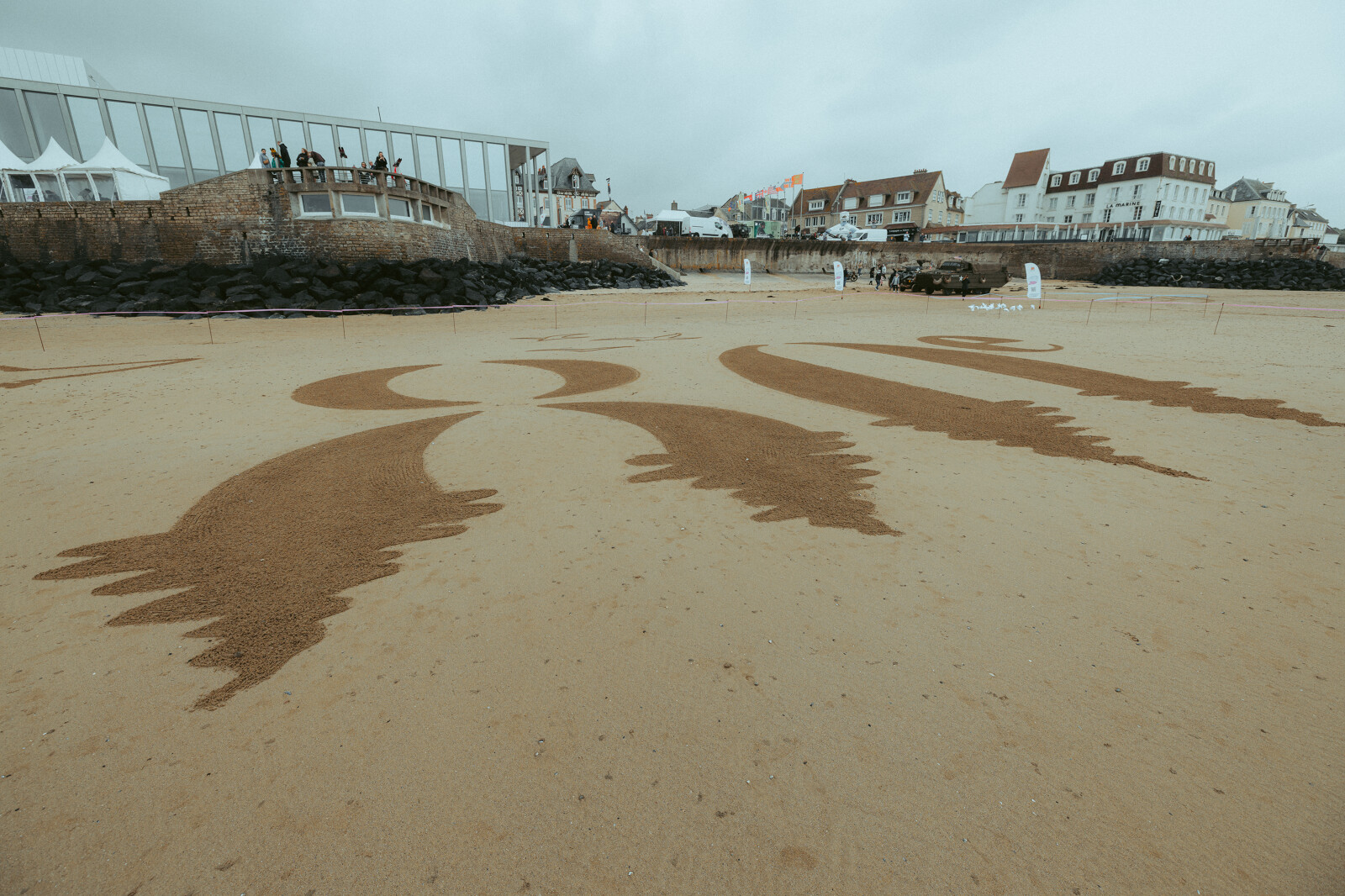
The D-Day Landings and the Battle of Normandy
D-Day: The Longest Day
Allied troops landed on the beaches of Normandy on June 6, 1944, while World War II had begun on September 1, 1939. Although these troops were primarily made up of American, British, and Canadian soldiers, a total of 17 nationalities were involved. The operation, known as Operation Overlord, had been in the works for many months. By opening a new front in Europe, it is now considered decisive because it led to the surrender of the Third Reich on May 8, 1945.
An exceptional organizational effort was launched, uniting numerous nations with the goal of bringing the war to an end. As an integral part of a strategy that had been in the works for many months, the Allies implemented a vast disinformation campaign—Operation “Fortitude”— which initially led people to believe that the Pas-de-Calais would be the site of the D-Day landings.
But on June 6, 1944, it was indeed Normandy that some 156,000 men set foot on, accompanied by more than 20,000 vehicles, 5,000 boats, 4,000 landing craft, 130 warships, and 12,000 aircraft.
Hell Continues: The Battle of Normandy
The outcome of World War II was still far from certain when the Allies successfully landed on the beaches of Normandy on June 6, 1944. The weeks that followed were decisive in hastening the fall of the Third Reich. More than two million soldiers fought each other in the summer of 1944 on Normandy soil. Civilians found themselves, against their will, in the midst of one of the greatest battles of the 20th century. After three months of fighting, Normandy was liberated from German occupation, but given its razed cities, its many destroyed villages, and the 20,000 civilian deaths, the victory left a bitter taste.
Destination D-Day Normandie-Terre de Liberté
With its museums, historical sites and cultural and educational facilities, Normandy is unveiled as an open-air history book, to understand not only the Allied and German military strategies in 1944-1945, but also the keys to the European construction