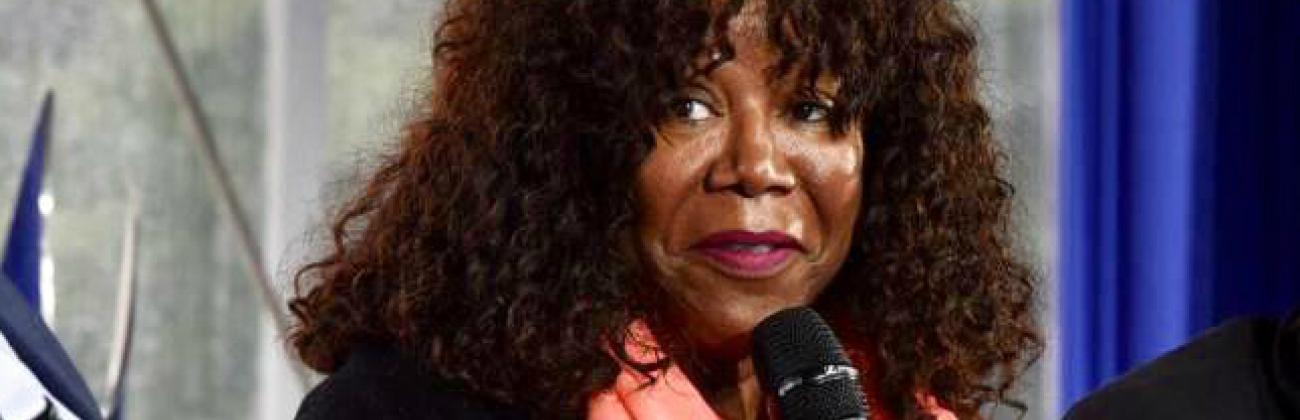
In 1960, Ruby Bridges was the first African-American girl to attend a whites-only school in the United States. As the spokesperson for her foundation, she works with children, attending the Normandy World Peace Forum to explain the importance of tolerance and respect for differences.
On 14 November 1960, six-year-old Ruby Bridges was escorted by federal agents through the doors of William Frantz Elementary School in New Orleans. She was the first black girl to attend a school which had previously only been for white children. Six years before, the Supreme Court ruled that racial segregation in public schools was unconstitutional. White residents in New Orleans protested violently, until a city judge ruled against them. Ruby's parents, “children of Mississippi farmers who never had the chance to go to school”, responded to the call of NAACP (National Association for the Advancement of Colored People). But in the segregationist South, whites were not willing to accept this integration.
Ruby was greeted by a booing racist mob. “My mother had warned me that there might be lots of people but I didn’t understand that I was the cause of their anger.” She was immediately “catapulted into the civil rights movement at the age of six”. Since local and state police officers refused to protect her, federal marshals accompanied her. The scene was immortalised by the painter Norman Rockwell in his painting The Problem We All Live With which made the front cover of the magazine Live in January 1964. It shows Ruby and her bodyguards walking by a wall which bears the word “nigger”. Rarely seen outside the United States, the painting will be exhibited at the Caen Memorial from 10 June.
“There’s no innate racism”
On that day, all white parents removed their children from the school. Ruby entered an empty building. The teachers also left the school. All except one white teacher who taught Ruby on her own for a year, as if teaching a whole class. Originally from Boston in Massachusetts, she was called Barbara Henry. “She became a mother to me and she taught me never to judge by the colour of a person’s skin. Thanks to her, I don’t see the world through the prism of race.” Ruby’s family paid dearly for their decision. Her father lost his job and her grandparents were asked to leave their land.
“The innocent of my childhood protected me,” she says with emotion in her voice. “There’s no innate racism, adults simply become racist.” That’s why, as an adult, she has chosen to work with children, tirelessly telling them her story “so that no other child will suffer hatred and racism.” In 1999, she founded the Ruby Bridges Foundation which works with young people to promote “the values of tolerance and respect and an appreciation for differences”. Today, William Frantz Elementary School only teaches black children and, in some American states, “children protest to have the right to go to school without fear of being shot”. There are still plenty of battles to be fought. Ruby Bridges, the last heroine of the struggle for African-American rights, shares her story. On Tuesday 4 June, after her speech at the Normandy World Peace Forum, she met with school children from Caen. “Our children will change the world,” she concludes.