At a time when geopolitical upheavals are redrawing the global balance of power, two members of Normandy for Peace's scientific council share their analyses in their new books. Nicole Gnesotto, a specialist in European affairs, explores the internal divisions within the West. Bertrand Badie, a renowned political scientist, examines the international humiliations that fuel tensions. In this joint interview, they compare their visions of a changing world.
You each have published a book on the current geopolitical upheavals. Nicole Gnesotto, you refer to the ‘fractures’ in the West; Bertrand Badie, you talk about the ‘humiliated’. In your opinion, what is the tipping point that has most weakened the international order?
Bertrand Badie:
Since 1945, we have experienced at least three turning points that have been poorly understood and poorly assimilated, which have paradoxically weakened the international order: while all three were moving in a direction that could be considered positive, all three gave rise to a new and belligerent wave of humiliations. These were decolonisation, which was supposed to emancipate but resulted in the marginalisation of most countries in the ‘global South’; the depolarisation linked to the collapse of the USSR, which led to the real or strategic humiliation of Russia, deprived of any status in the international arena; and globalisation, which has given rise to fears of new waves of exclusion and rejection.
Nicole Gnesotto:
Without a doubt, the emergence of globalisation in the late 1980s was at the root of this international upheaval. In 1985, for specific reasons, the two communist powers, Russia and China, recognised the dramatic failure of the planned economy system. They were therefore forced to integrate the market economy: Russian communism would perish as a result, while Chinese communism would use it as a means of survival. It was this dual geopolitical revolution that laid the foundations for the lasting economic revolution that is globalisation: the world is now a single, more or less open and unified market.
This was a magnificent victory for the liberal West, but it also marked the beginning of the end of its omnipotence. As trade became globalised, China began a meteoric rise, followed by several other emerging countries in the global South. Westerners lost market share, industries relocated to Asia, and financial capitalism triumphed. From the 2000s onwards, globalisation seemed to benefit China more than the United States: at least, that was Donald Trump's interpretation, and the beginning of the American counter-revolution he led against liberalism in all its forms.
Nicole Gnesotto, how do you explain the rejection of the very foundations of our democracies? Does the West need to radically rethink itself?
The number of people disappointed with democracy and globalisation continues to grow, both in Europe and the United States. Conversely, this disillusionment is fuelling a desire for order and authority that is growing in Western opinion. There are at least two reasons for this worrying trend. First, there is a feeling that globalisation mainly enriches others: the anxiety about the continuing impoverishment of the middle classes and the children of the next generation plays a major role. Secondly, there is disillusionment with a political system that maximises individual freedoms, to the point of woke delirium, but which now struggles to meet collective needs in terms of health, work, security, etc. Democracy no longer delivers. The rejection of immigration also plays a role in this populist retreat, but the real reason, it seems to me, is primarily the fear of economic decline, rather than demographic replacement.
Bertrand Badie, in your book you show that humiliation is used as a lever for geopolitical tensions and fuels authoritarian regimes. Does this mean that democracy is powerless in the face of this sentiment?
Democracies, through colonisation and incomplete and ill-conceived decolonisation, have often caused radicalised humiliation in Southern countries. These have commonly been seized upon as opportunities by political entrepreneurs who have used them as a pretext to build autocratic and sometimes aggressive regimes. A vicious circle has thus been established: this radicalisation has led to new tensions with the outside world, and therefore to retaliation and confrontation, which have reactivated the humiliations of the past.
Your books deal respectively with internal divisions and international humiliations. Are these two dynamics linked?
 Nicole Gnesotto:
Your books deal respectively with internal divisions and international humiliations. Are these two dynamics linked?
Although the West is riven by serious divisions – between the United States and Europe, between the rich and the middle class, between the elites and the working class, etc. – it remains convinced that it rules and must continue to rule the world: the tendency to lecture the rest of the planet is indeed a structural feature of Western rhetoric. But if we restrict our analysis to the West itself, we are struck by the fact that the notion of humiliation is also present, but in reverse.
Paradoxically, it is the richest and most powerful leader, Donald Trump, who is developing the narrative of exploitation and humiliation: the president is convinced that the whole world is taking advantage of the United States, starting with the European Union, and that America is paying for others. Hence his slogan aimed at reviving the glory days of American power (make America great again) and his policy of imposing heavy taxation on the whole world in order, in his view, to restore a more equitable balance in trade relations. Similarly, his desire to see Europeans pay more within NATO is akin to revenge. Further down the social ladder, the middle classes are also developing a feeling of being abandoned by their leaders, more exploited than humiliated, but it is clear that the need for dignity also plays a role in the social crises that regularly shake Western countries.
Bertrand Badie:
It is certain that divisions, whatever they may be, can create humiliation as well as nationalist and populist retrenchment: the phenomenon is currently visible in Europe, even if the issue of humiliation is not centred on this aspect of things.
In recent years, we have witnessed a profound transformation in diplomacy, particularly under Donald Trump, marked by the systematic use of power relations, compromise and domination in an attempt to advance peace processes. In your opinion, does this approach mark a lasting break in the way we think about international relations? Should we see it as a symptom of a disoriented world, where internal divisions and external humiliations feed off each other?
Nicole Gnesotto:
For centuries and throughout the world, the use of force, the calculation of power relations, and the imposition of the law of the strongest have always been the rule in international relations. This has resulted in hundreds of wars and structural instability across the globe. It took two world wars, which began in Europe, for a philosophical and legal revolution to take hold in the management of international security: the primacy of law over force is enshrined in the United Nations Charter, created in 1945. What we are experiencing today is therefore a huge strategic regression: a return to the age of force over the age of law. Is it permanent? Should we consider the period from 1950 to 2020 as a historical interlude, now closed by the return of violent ‘normality’ to the world? Or should we instead hope for the defeat of the advocates of brute force and act accordingly? This is the challenge for the coming decade.
Bertrand Badie:
The balance of power can in no way lead to peace; on the contrary, contrary to what certain aphorisms suggest, it can, under certain conditions, lead to a ceasefire but certainly not to peace, because peace presupposes coexistence, which in turn implies trust, parity and a deep sense of otherness, which the balance of power cannot provide. It is precisely this abusive and obsessive reference to the ‘balance of power’ or ‘power equilibrium’ that has traditionally reduced peace to ‘non-war’ and a simple ‘interlude between wars’.
In a few words, what message of hope would you give to younger generations who are witnessing, sometimes with disillusionment, this world in transition?
Bertrand Badie:
Young people have the advantage of being born into a globalised world already dominated by major planetary issues and empathy for the suffering of others: they have a better understanding of what peace means and demonstrate this through their current activism, on campuses and through Gen Z. It is up to them to persevere along this path, to bring this message of peace up to date and to teach it to us!
Nicole Gnesotto:
More than a message of hope, I would like to make today's young people aware of the urgent need for civic and political mobilisation. We must fight. Today's world is paved with terrible war dynamics, dramatic natural and climatic changes, and major risks to democracy. But nothing in history is inevitable. As Alfred Camus said in his Nobel Prize acceptance speech in 1957, ‘Every generation thinks it will remake the world. Mine knows it will not. But its role is perhaps even more important: to prevent it from falling apart.’
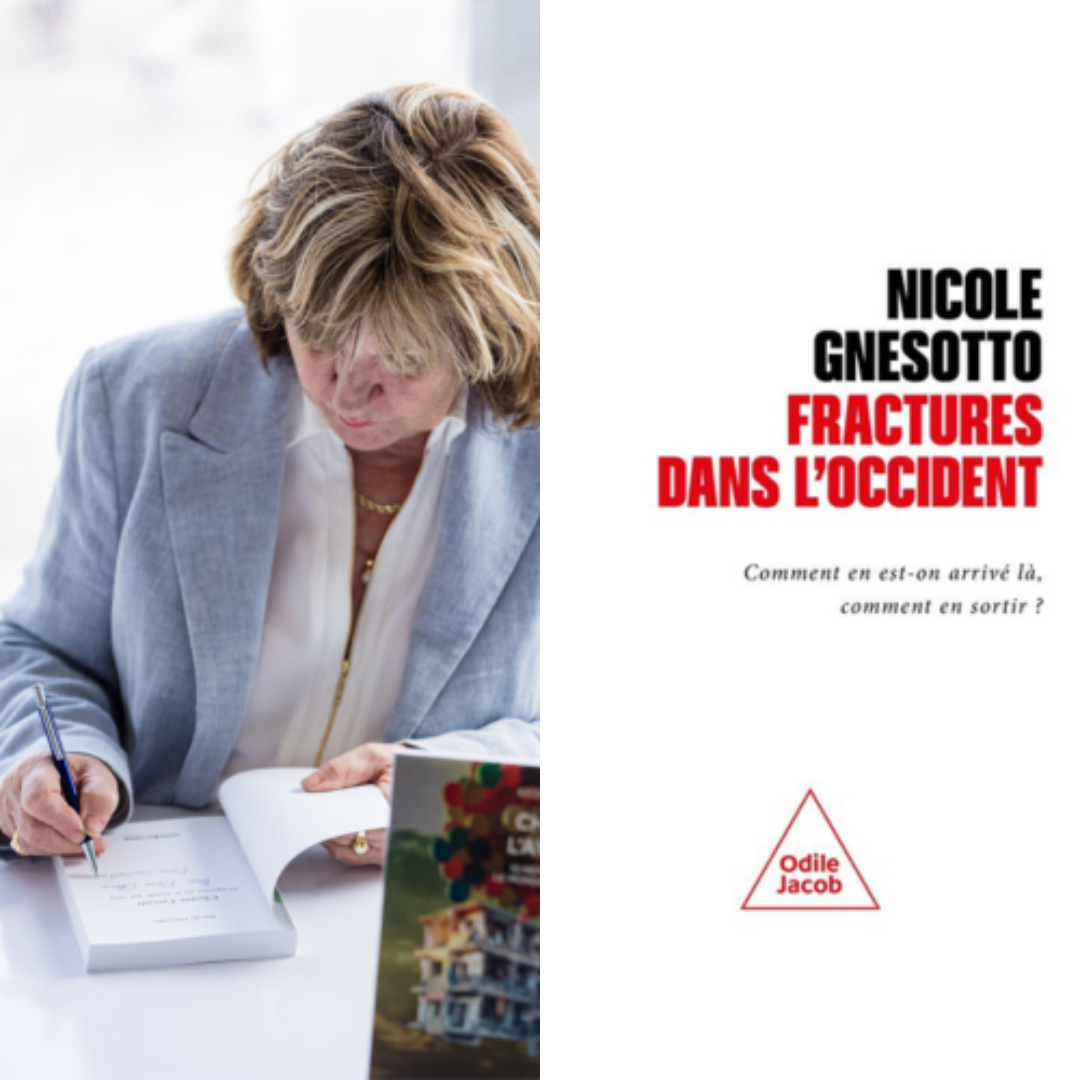
Fractures dans l’Occident – Nicole Gnesotto
Published by Odile Jacob on 1 October 2025, this essay is a plea for democracy and Europe. In it, Nicole Gnesotto analyses the internal excesses of the West, the rise of populism, the rejection of elites and the strategic flaws revealed in particular by the war in Ukraine. ‘It is a book that fights to defend democracy,’ says the author.
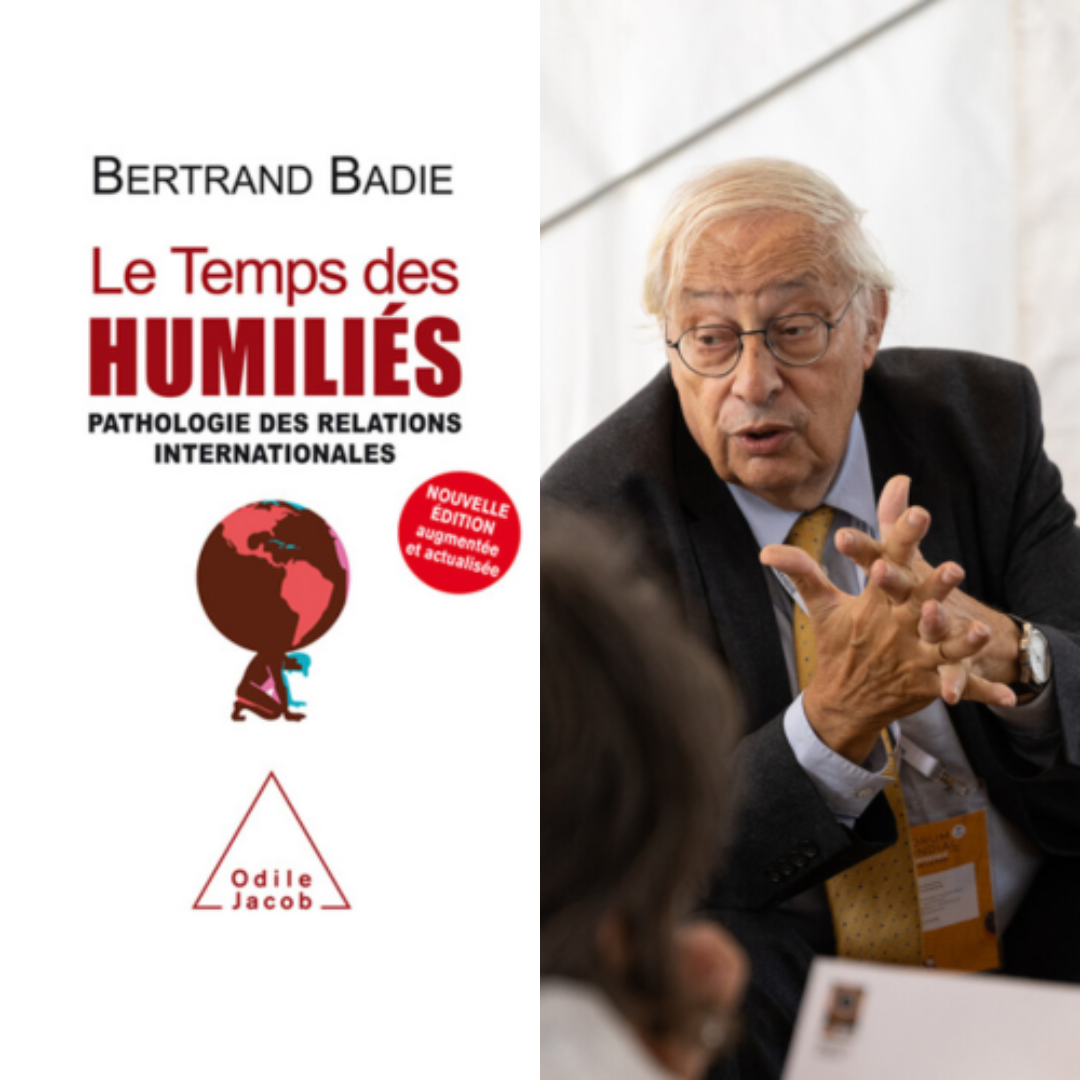
Le Temps des humiliés – Bertrand Badie
Published on 29 October 2025 by Odile Jacob, this book explores the pathology of international relations through the prism of humiliation. Bertrand Badie shows how this dynamic fuels geopolitical tensions and favours authoritarian regimes. Essential reading for understanding the underlying drivers of contemporary diplomacy.