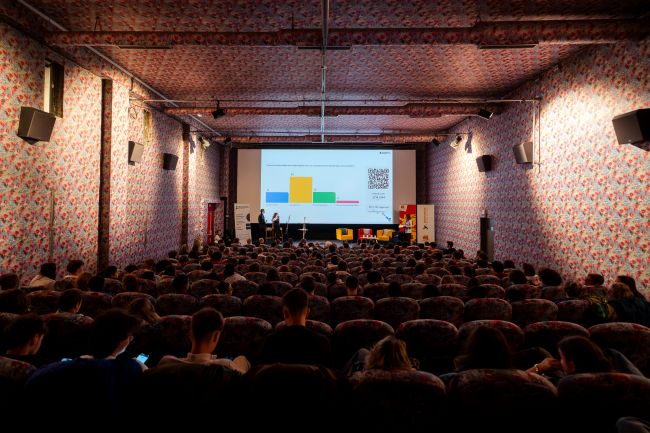
On 4 June 2026, the Café des Images hosted the presentation of the youth section of the Ecoality programme, an event dedicated to young people’s engagement with the intersecting issues of climate change and equality. The event was notable for the diversity of the projects presented and the depth of the discussions.
For several hours, secondary school pupils and young activists presented the results of months of work, combining reflection, research and practical action. A panel of renowned experts – including Nicole Ameline, Barbara Santibanez and Bertrand Morvilliers – guided the discussions, giving participants the opportunity to test their ideas and refine their analyses.
A clear-sighted and committed generation
As the presentations and interactive discussions unfolded, enhanced by the use of the digital tool Mentimeter for live polls and contributions, one thing became clear: the younger generations are fully aware of today’s climate challenges. But their commitment does not stop there. The contributions also highlighted a strong sensitivity to issues of equality, whether concerning women’s rights, climate justice or territorial inequalities.
Practical and innovative projects
Among the many initiatives presented, several projects attracted particular attention.
- The ‘Fleurir nos vies’ project, led by eight Year 10 pupils from Saint-Anselme High School in Bernay, exemplifies an approach that is both ecological and social. As part of Bee Flower Week, these pupils are organising a day of action combining the distribution of flowers, artistic creation centred on emotions, and the making of seed bombs. The aim: to rebuild connections within the school whilst raising awareness of biodiversity.
- Another notable initiative: the educational adaptation of the game ‘Who’s Who?’, redesigned to highlight pioneering women and fill certain historical and geographical gaps. This project is accompanied by innovative tools, such as an enhanced timeline and podcasts accessible via QR codes, with a view to fostering lasting awareness among both pupils and teachers.
- Finally, the IA’URGENCE project has generated considerable interest thanks to its original approach. Designed as an immersive escape game, it aims to challenge common misconceptions about artificial intelligence. Participants gain a practical understanding of the environmental impacts (energy and water consumption by data centres) as well as social issues, such as algorithmic bias. Aimed at 15- to 25-year-olds, this initiative seeks to develop critical thinking and encourage a more responsible use of AI.
A formative experience
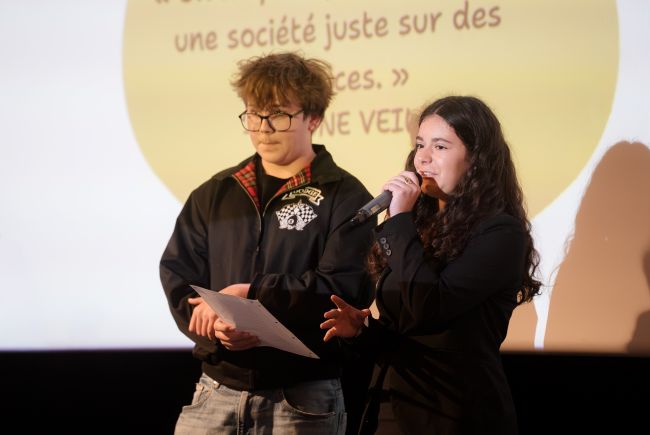
Beyond the content, the event also provided a real learning experience for the participants. Speaking in public, structuring a speech, presenting a project… these are all essential skills that are developed in this kind of setting. Despite the initial nerves, many of the young people gained confidence as the discussions progressed.
By providing a supportive and encouraging environment, the Ecoality programme helps to boost young people’s self-confidence and communication skills – valuable assets both in their academic careers and in their civic engagement.
Giving a voice to build the future
A strong conviction emerged from this meeting: young people must be fully involved in finding solutions to environmental and social challenges. Their creativity, clear-sightedness and capacity for action are key drivers in devising sustainable and inclusive solutions.
This report thus confirms the importance of education, intergenerational dialogue and civic engagement in the ecological transition. It is a promising development, driven by a young generation that is resolutely focused on the future.